
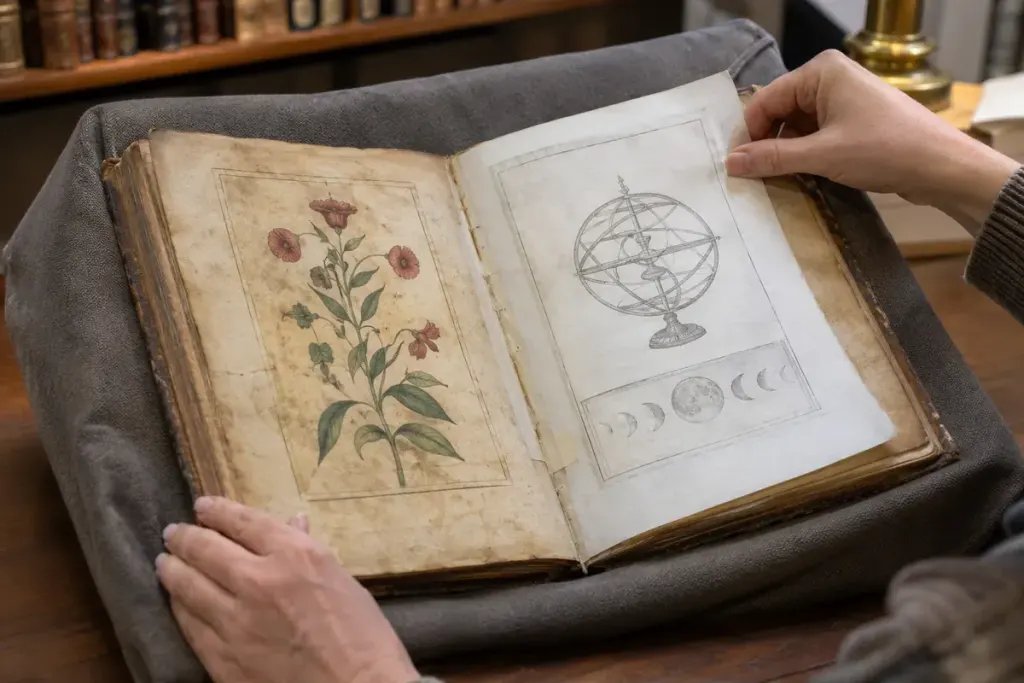
A printed book does not always preserve a single, untouched journey from press to binding. Sometimes a leaf was removed and replaced while the rest of the book remained. Bibliographers call the replacement a cancel, and the surviving evidence can tell a story that the title page does not.
In a Folger Shakespeare Library study of Thomas Nashe’s books, Kate De Rycker explains the terms: the intended removal is the cancellandum, while the replacement is the cancellans. A leaf has two sides, so “one replacement page” can be an imprecise description of the physical change.
Read the copy note, not only the edition date
A catalogue may identify a particular leaf as a cancel or describe different states. Those details help explain why two copies carrying the same publication date do not necessarily contain exactly the same physical evidence.
Cambridge University Library’s Leigh Collection description gives a striking example: a copy of Rousseau’s Contrat social retains both a replacement leaf and the original it was intended to replace. Here the library record supports a comparison rather than merely naming an edition.
Keep observation separate from explanation
A smaller leaf, a stub or a difference in paper can raise a question, but none should be treated alone as proof of censorship or an author’s change of mind. Repairs, binding history and other explanations may also need consideration.
For a reading note, record the library and shelfmark, the leaf reference used in the catalogue, and what the description actually says. Put your own question on a separate line: “Does another copy preserve the earlier wording?” is more responsible than declaring why a replacement happened without evidence.
Use digital images where available, and follow the library’s handling instructions when consulting the object. Do not pull at a suspected stub to investigate it. The interest lies in preserving and comparing the evidence: a small change within one copy can reveal a stage in a book’s production that a clean modern transcription makes invisible.