
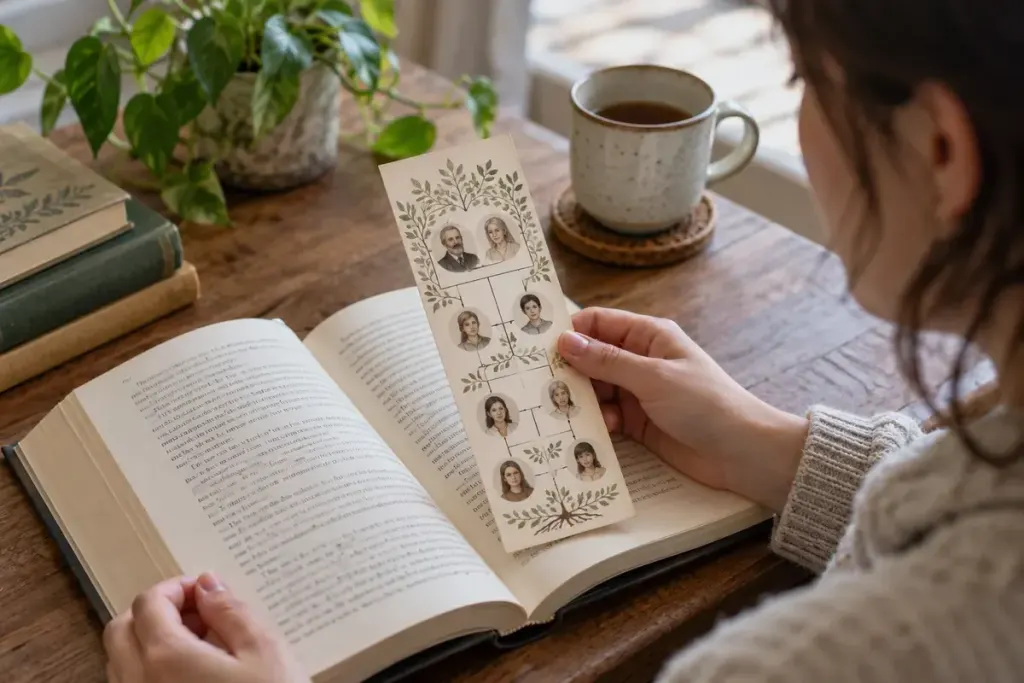
A novel introduces two cousins, an aunt and someone known by a childhood nickname. You turn back to check the relationship and accidentally see a later revelation in the printed family tree. A reading map can help, but it is worth deciding how much information you want it to reveal.
Before consulting a book’s front or back matter, check whether its notes warn about spoilers. An introduction, chronology or family tree may describe the whole story rather than the point you have reached. An online character guide can do the same.
Build a map that stops where you are
Use a loose sheet or notebook. Add a name only when it appears in your reading. Connect people using the relationship the text has established, and write the chapter or page beside the connection. If you suspect a relationship but it has not been confirmed, use a question mark instead of a solid line.
Keep aliases on the same entry: “Mara — called May by her brother.” This avoids accidentally turning one person into two. For an audiobook, use a chapter and approximate timestamp rather than trying to invent a page reference.
When the narrator may be wrong
A character’s statement is not always the novel’s final explanation. Label the source of an uncertain claim: “Jon says they are cousins.” That little phrase preserves the difference between what the story has shown and what one person believes.
Do not let note-taking interrupt every scene. Update the map after a chapter or when confusion genuinely blocks the reading. A few clear connections are more useful than an elaborate diagram that becomes another assignment.
At the end, compare your map with any supplied genealogy if you wish. Notice which relationships the author delayed, obscured or changed your understanding of. The map then becomes a record of your experience of the novel, including the uncertainty that made the story interesting.