
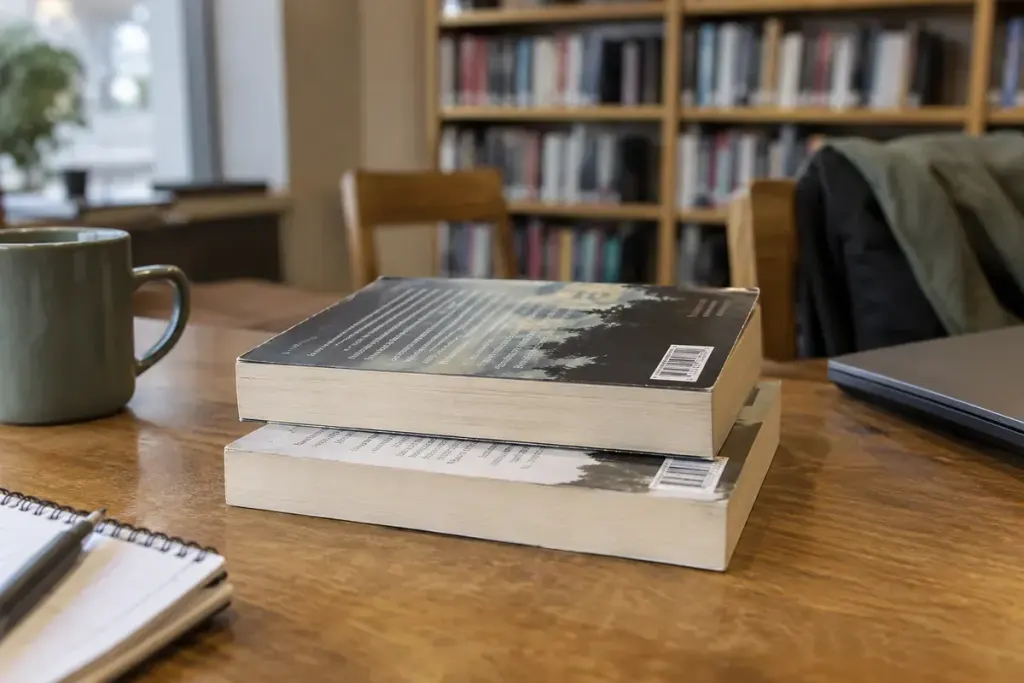
Two books can share a title and cover style while offering a different reading experience. One may be a revised edition, another an older translation, and another an electronic version. The ISBN helps narrow down which publication a seller is offering, but it does not tell you whether that publication is the right choice.
The International ISBN Agency explains that the number identifies a title, edition, and format. This makes it useful when a reading group, course, or library request calls for a particular version. It is not a review score or a guarantee of editorial quality.
Compare the identifier with the actual description
For a second-hand purchase, ask the seller to confirm the number printed in the book rather than relying only on a catalogue listing. Then compare the edition statement, publisher, translator where relevant, and format. A generic stock photograph may not show the copy that will be dispatched.
Suppose a group plans to discuss notes found in a particular annotated edition. Matching only the novel’s title could leave you without those notes. Conversely, if you simply want to read the story, an exact match may matter less than readable type, a translation you enjoy, and the book’s condition.
Keep condition and completeness separate
The right ISBN does not promise clean pages, an intact binding, or the inclusion of a separately supplied map or other accessory. Ask about those details explicitly. For used textbooks, do not assume that an online access code remains usable because the printed book is the correct edition.
When recording your own reading, save the translator and edition alongside the title if they influenced your experience. That makes a later recommendation more helpful than a bare number.
Use the identifier to answer “Which version is this?” Then use sample pages, a contents list, and reliable reviews to answer “Will this version suit what I want to read?” Those are connected decisions, but the number only assists with the first.