
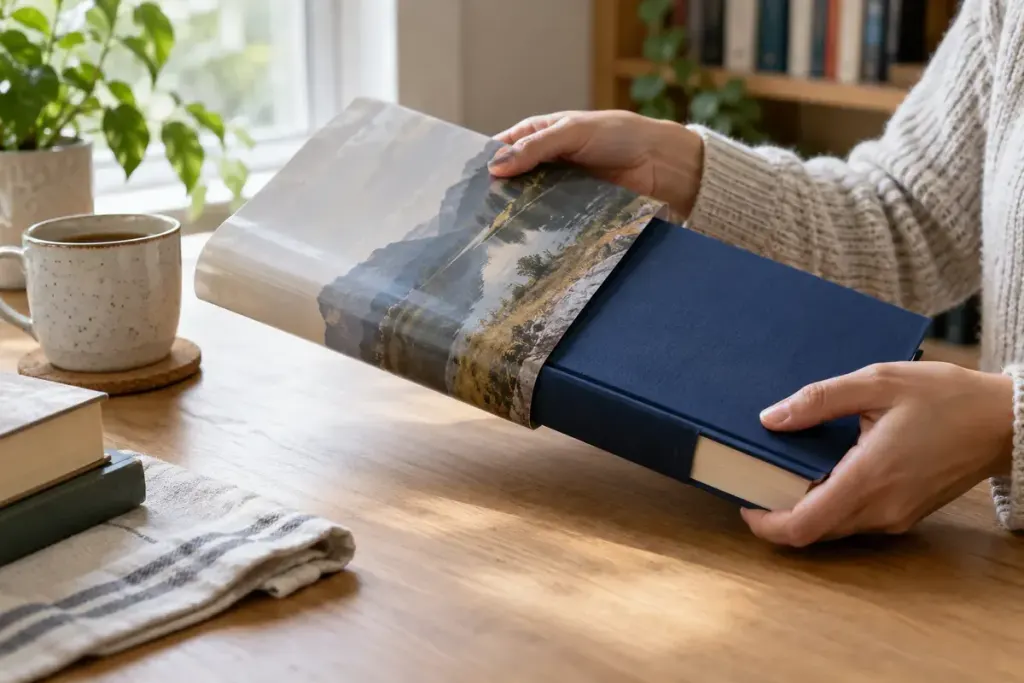
The paper jacket around a hardback can carry artwork, a synopsis and information about that particular edition. It is also easy to crease while reading. Caring for it starts with deciding where it will go when it is not on the book.
If the jacket slides around or catches on your hands, remove it carefully and put it somewhere clean and dry. Keep it with a note identifying the book if several jackets are off at once. An unlabelled pile beside a reading chair soon becomes a sorting problem.
Give the folds room
Open the flaps only as far as needed to release the boards. Avoid flattening an existing fold sharply in the opposite direction. A jacket that is too delicate to handle comfortably may need a suitable protective enclosure and advice from a conservator, especially if it has personal or financial significance.
For everyday handling, the Library of Congress recommends clean, dry hands without lotion. Set aside drinks and use a clear surface so the jacket is not resting on crumbs, damp rings or uncapped pens.
Before putting it back
- Check that the book and jacket are dry and free of loose debris.
- Align the spine panel before settling the front and back flaps around the boards.
- Return the book to a shelf with enough space that neighbouring volumes do not drag against the jacket edges.
Do not automatically repair a tear with household sticky tape. Adhesive can create another preservation problem, and an apparently neat repair may be difficult to reverse. A protective cover designed for book jackets can be considered, but it should fit without pulling on the paper or sticking adhesive directly to it.
Keep purchase stickers and handwritten notes separate from any assumptions about value. A jacket’s condition is only one feature of a book, and collecting claims need edition-specific evidence. For a favourite reading copy, the most useful result is simpler: the jacket remains identifiable, protected and easy to reunite with its book.