
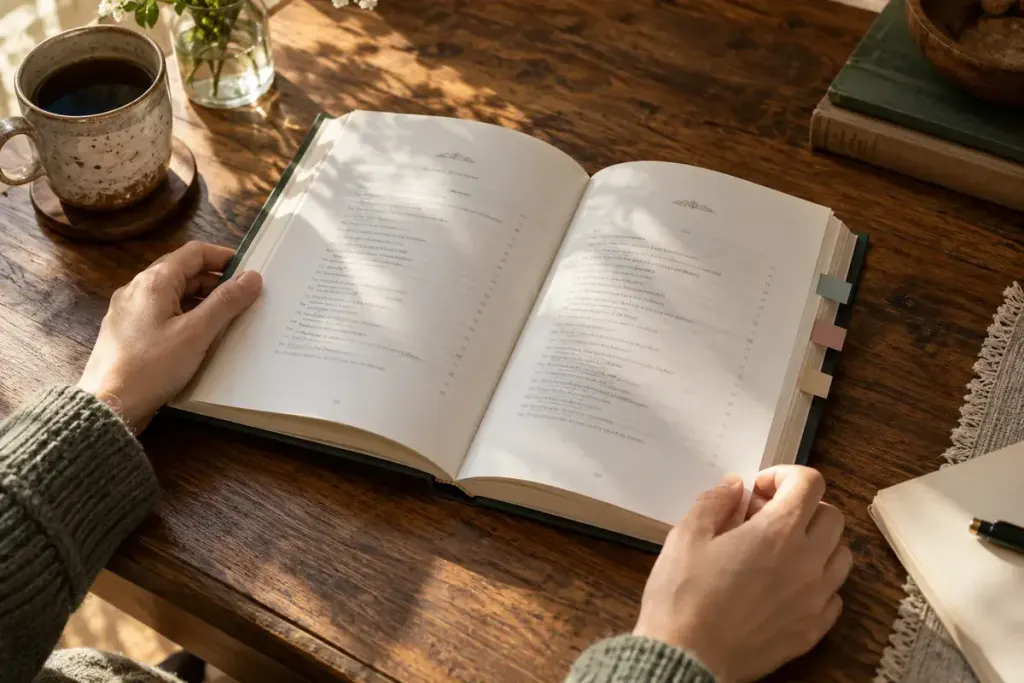
Two books can both say “large print” on the cover and feel very different after a few pages. One opens comfortably on a table; another needs a firm grip to keep the words near the binding visible. Choosing a readable edition begins with trying the page as well as checking the label.
Read a passage, not just a heading
Ask to see an ordinary page containing continuous prose. Chapter headings and cover lettering cannot tell you how the main text will feel. Read several paragraphs in the lighting and position you expect to use. Notice whether you can follow the next line easily, whether letters remain distinct and whether the reverse-side printing distracts you.
RNIB’s guide to large and giant print recommends browsing available books, including at a local library, to check their suitability. Treat a stated font size as useful information rather than a guarantee that every reader will find the page comfortable.
Check which text you are buying
Compare the author, title, translator where relevant and edition description. If you want the complete text, look for an explicit unabridged description or ask the publisher. Larger lettering does not by itself tell you whether an edition has been shortened, adapted or otherwise changed.
For a book club, record chapter titles as well as page references. Different typesetting can move the same passage to another page. Nobody needs to buy an uncomfortable edition simply to match the group’s page numbers.
Then try the physical handling: lifting the book, opening it at the beginning and turning a page. A useful comparison might be “clear text, but too heavy to hold in bed” rather than a verdict that large print does not work. A reading stand, a different binding or an adjustable digital edition may change that experience.
If the book is a gift, involve the reader in the choice. Their preferred genre and comfort matter together. Save the publisher and edition details of a successful trial so the next search starts with evidence from a book they actually enjoyed reading.