
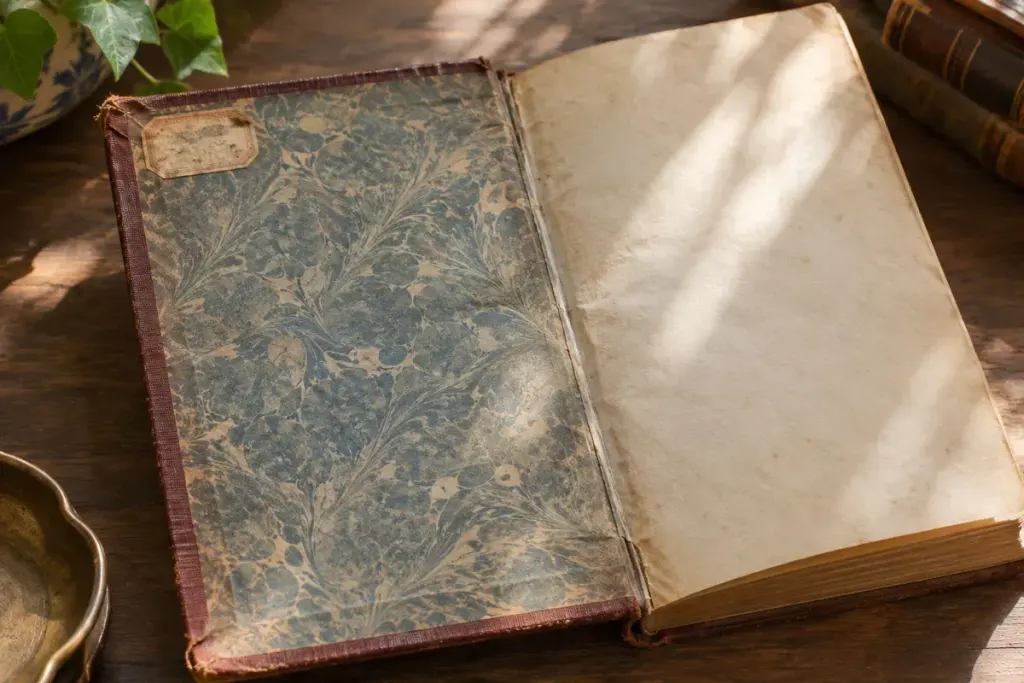
Open an old book gently and look inside the cover. A small label in a corner may carry a name that does not appear on the title page. It could identify the person or workshop responsible for the binding, a separate stage in the object’s life.
The Language of Bindings entry for binders’ tickets describes small printed, engraved or occasionally manuscript labels placed inside covers or on adjoining endpapers, usually naming the binder and often an address. Their presence gives a specific kind of evidence. It does not automatically identify the printer, publisher or first owner.
Record the label in place
Photograph its location as well as a readable close-up, supporting the book without forcing it flat. Transcribe the wording and line breaks into your notes. Preserve unusual spelling and distinguish a printed date from one written by hand.
The University of Toronto’s exhibition on endpapers includes a ticket naming Daniel Ewing and a binding date of 26 May 1777. A clearly stated date is particularly useful, but not every ticket supplies one. An address can become a research lead rather than an immediate date for the whole volume.
Imagine a book printed in one city with a binder’s label from another. Several explanations are possible: it may have travelled before binding, been rebound later or entered a local trade network. The label alone does not choose among them. Compare it with the title page, binding structure, ownership marks and reliable catalogues.
Resist tidying away the evidence
Do not peel the label to look beneath it or remove it as an old shop sticker. A bookseller’s label and a binder’s ticket can look similar, so read the wording before assigning a role. If the paper is lifting or brittle, a conservator can advise on care without sacrificing the information.
In a collection record, use separate fields for publication details and copy-specific features. “Binder’s ticket inside front cover” tells a future reader where your observation came from. The book’s history becomes richer when those different kinds of evidence remain distinct.