
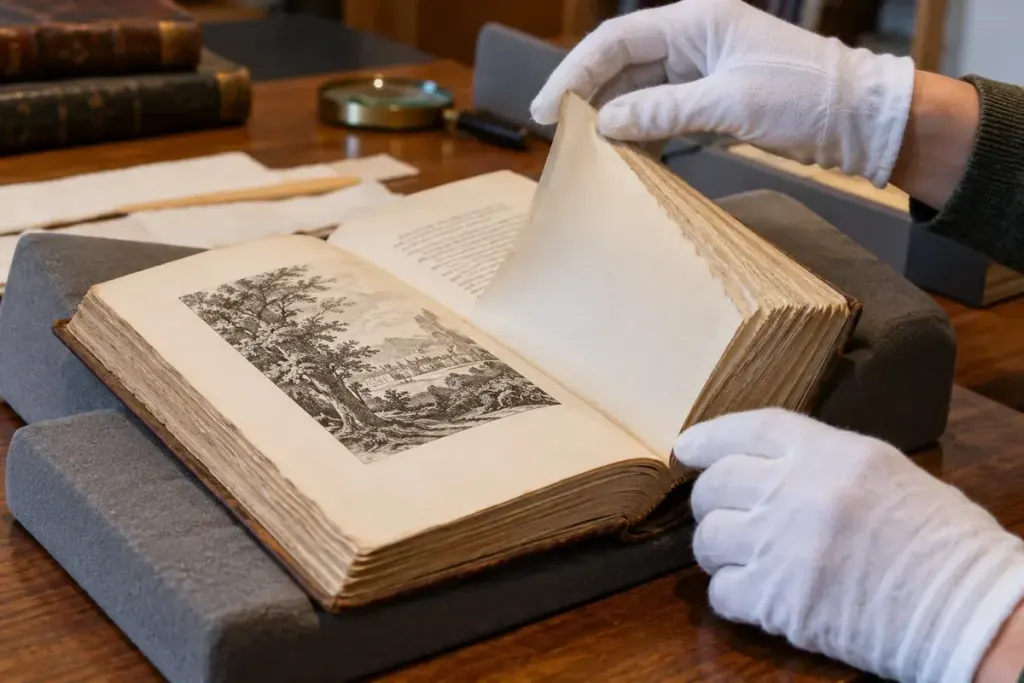
A rough page edge and a pair of leaves still joined at a fold are different features. The first may simply be the book’s intended finish. The second can prevent the reader from reaching part of the printed text. Knowing the distinction matters before deciding that a volume is damaged or reaching for a cutting tool.
Two terms that are easily confused
The Antiquarian Booksellers’ Association guide to trade terms distinguishes uncut or untrimmed edges from unopened leaves. Traditional book production folds printed sheets into groups of pages. When some folds remain joined, those leaves may be described as unopened. An untrimmed edge, by contrast, does not necessarily stop the pages from turning.
That distinction also explains why “uncut” in a bookseller’s description is not always a complaint. It may describe a physical state that a collector wants preserved. Do not assume an older term has exactly the same meaning as “unfinished” in everyday conversation.
Inspect without forcing the opening
Support the book and turn pages gently. Locate the point where the leaves remain connected, without pulling them apart. Note whether the issue occurs repeatedly at folds or looks like an isolated manufacturing fault. Photographs of the edge and the affected opening can help a seller or conservator understand the question.
For a newly purchased reading copy, contact the seller before altering it. For an older, valuable or fragile volume, ask a qualified book conservator or knowledgeable bookseller about the consequences of opening the leaves. A casual cut can damage printed areas or change a feature relevant to the book’s condition and description.
If the immediate purpose is reading rather than collecting, a library copy or a legitimate digital edition may solve the access problem while the physical book is assessed. You do not have to decide the conservation question merely to finish a chapter. Accurate terminology makes that conversation much easier: describe what is joined, where it occurs and what you can actually see.