
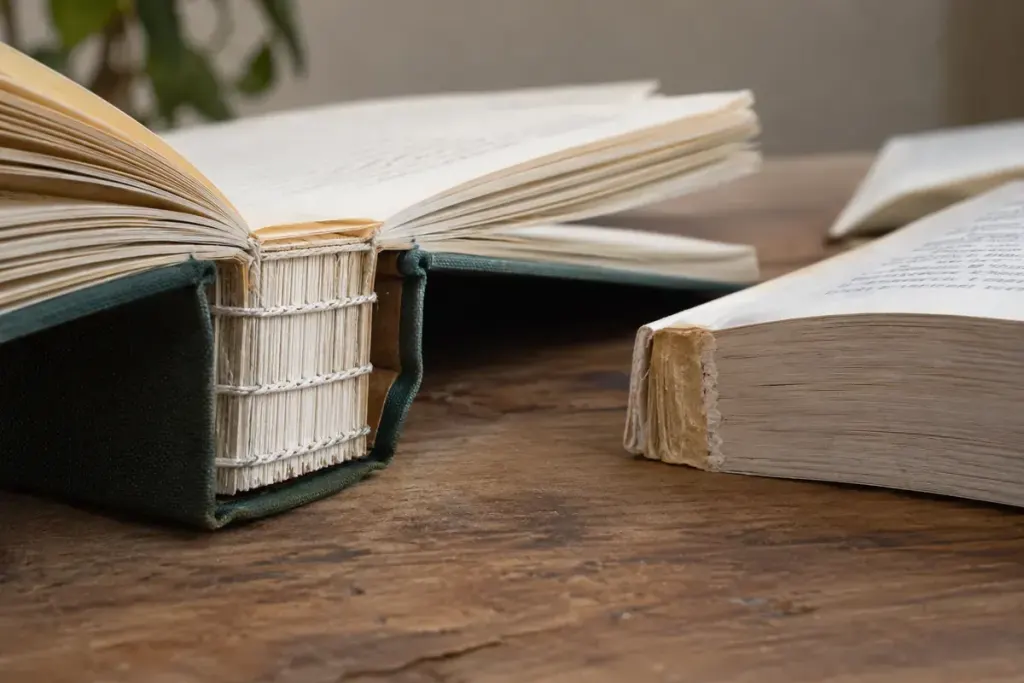
Two paperbacks can feel very different in the hand. One opens comfortably; another wants to close the moment you release it. Cover type alone does not explain the difference. The way the pages are gathered and attached matters too.
In a sewn construction, folded groups of pages, often called signatures, are joined with thread. Adhesive constructions attach the text block using glue-based methods. Real books combine materials and techniques, so a visible hard cover does not prove that the pages inside are sewn.
The Library of Congress account of its binding work describes both sewn signatures and adhesive-bound material. It is a useful reminder that binding is a practical construction choice, not simply a luxury label.
Open the book only as far as it moves comfortably. In some sewn books, thread is visible at the centre fold of a section. Do not pry into the spine to find it. Look for loose pages, splitting adhesive, strained hinges or sections that sit unevenly.
Paper thickness, page count, spine design and the condition of the book all affect how it opens. A sewn book can be damaged, and a well-made adhesive binding can serve its purpose well. Avoid turning one visible feature into a universal quality score.
Match the book to its use
A reference book you consult on a desk may need to remain open comfortably. A novel read while travelling may benefit more from low weight and a manageable size. For a cookbook or workbook, check the actual opening behaviour rather than trusting a photograph of the cover.
Support a reluctant volume instead of pressing its spine flat. If pages are becoming detached, keep them in order and ask a book conservator or binder about an appropriate repair, particularly for valuable material. Household tape can create another problem.
The best inspection ends with a useful judgment about this copy: how it opens, whether it is sound and whether that construction fits the way you intend to read it.