
Reading Poetry
Ottava rima: listen for the turn in the final couplet
Ottava rima alternates rhymes before closing with a couplet. Try a focused reading exercise to hear how the final two lines can change an eight-line stanza.

For the reading life, on and off the shelf.
Ottava rima alternates rhymes before closing with a couplet. Try a focused reading exercise to hear how the final two lines can change an eight-line stanza.

Read a tanka through its shift of attention, then try a short original exercise that connects an observed scene with a personal response.
Follow the repeated lines of a pantoum and notice how new neighbours change their meaning. Try a short original exercise before reading the ending again.
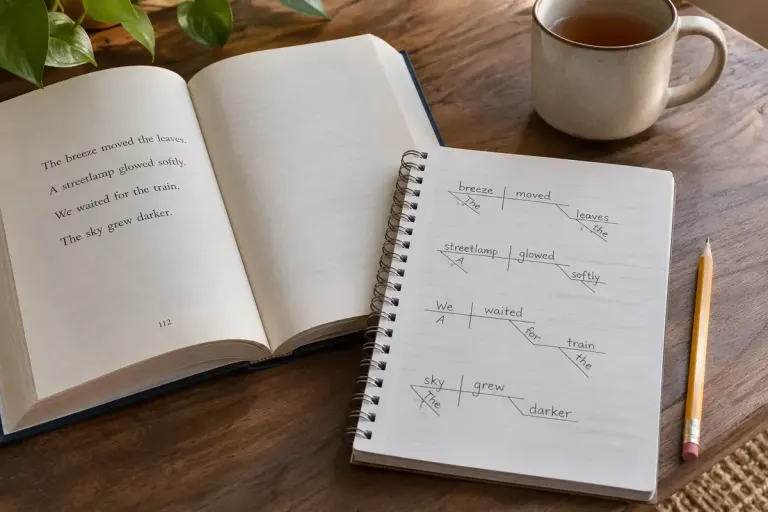
Try two short passages to hear how parataxis and hypotaxis organise clauses, pace a scene and change what a narrator seems to emphasise.

When a landscape seems to share a character’s feelings, look closely at the narration. Pathetic fallacy can reveal mood, perspective or a deliberate mismatch.

Read a dramatic monologue by listening for the speaker, the silent audience and the details that escape the speaker’s intended story.

Hypallage shifts a description to an unexpected word. Try a close-reading exercise that shows how a transferred epithet can change the atmosphere of a sentence.
Synecdoche lets a part stand for a whole. Use a few original examples to see how the choice of detail can change a sentence’s emphasis and tone.
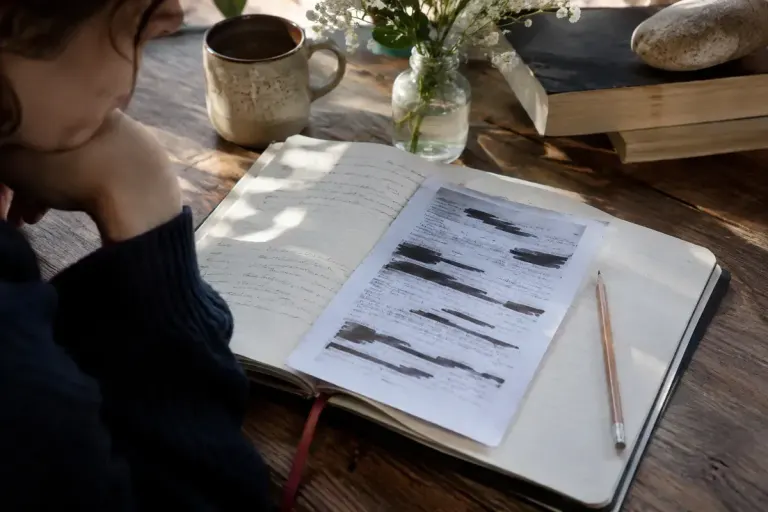
Erasure poetry makes a new work by removing words from an existing text. Read the surviving language, the spaces, and the relationship with the source.