
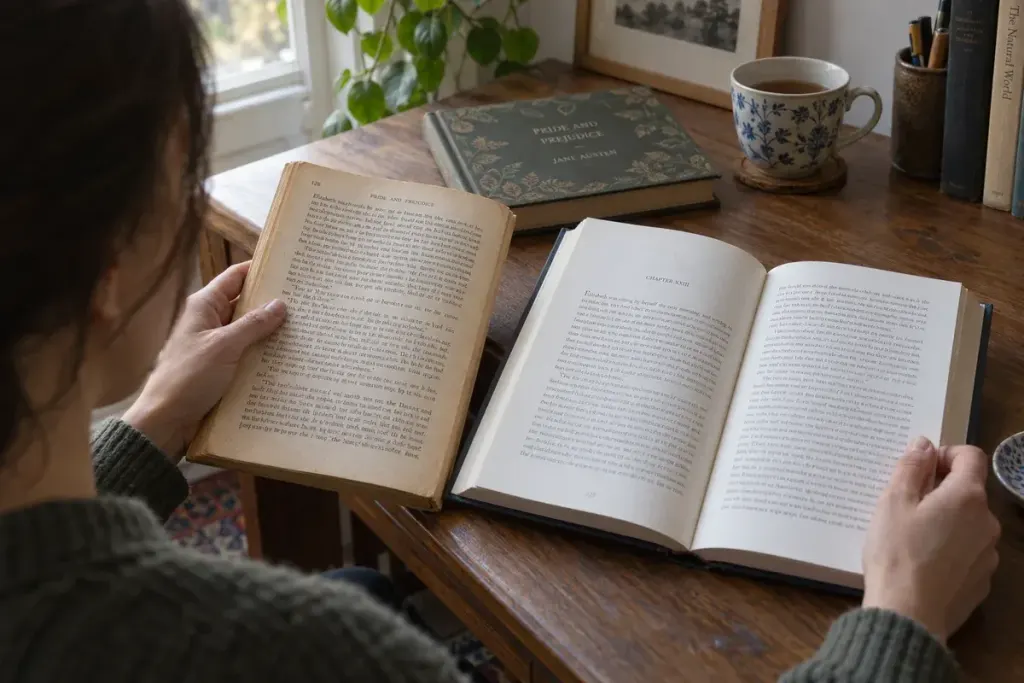
Two readers discuss the same novel and discover that a favourite sentence sounds quite different in their copies. Neither necessarily has the wrong book. They may be reading different translations, revised editions or versions with different supporting material.
The title on the cover identifies only part of the reading experience. The translator, editor and edition deserve a look before you buy, borrow or recommend a particular copy.
Start with the title and copyright pages
Record the translator’s name, publisher, publication date and any statement that the translation has been revised. Check whether the text is complete or abridged. An attractive cover can be reused across editions, while an online listing may show a different image from the actual book supplied.
The Library of Congress record for A Voyage to the Moon is one concrete example of a catalogue identifying a translator and an edition’s relationship to an earlier text. Library records can help resolve bibliographic details that retail descriptions leave unclear.
Compare a short passage fairly
Read the same scene in two editions if lawful previews or library copies are available. Notice rhythm, vocabulary and how dialogue feels. Do not judge an entire translation from one unusual word, and do not assume modern phrasing is automatically more accurate.
If you do not read the original language, describe your experience honestly: “This version is easier for me to follow” is different from “This is the most faithful translation.” Accuracy requires knowledge and evidence beyond personal preference.
Decide how much guidance you want
Introductions and notes can explain historical references, translation choices and unfamiliar conventions. They can also reveal major plot developments. If discovery matters to you, consider reading the introduction after the novel and using notes only when a passage needs help.
For a reading group, agree whether everyone needs the same edition. If copies differ, use chapters or scene descriptions as well as page numbers. A short shared note listing translators can prevent confusion during discussion.
Keep edition details in your reading record when a book makes an impression. Later, “the blue paperback” may be difficult to find, while a translator and publisher give you a practical route back. Paying attention to these other names does not make reading fussy; it helps you recognise the people and choices that shaped the words you encountered.