
Reading Poetry
Synecdoche: when one small part stands for a larger whole
Synecdoche lets a part stand for a whole. Use a few original examples to see how the choice of detail can change a sentence’s emphasis and tone.

For the reading life, on and off the shelf.
Synecdoche lets a part stand for a whole. Use a few original examples to see how the choice of detail can change a sentence’s emphasis and tone.

An ekphrastic poem does more than describe an artwork. Try reading for the speaker, the imagined moment and the details the poet chooses to leave out.

Recognise the ABBA pattern of chiasmus and see how reversing ideas can sharpen a sentence—or merely make it sound convincing.
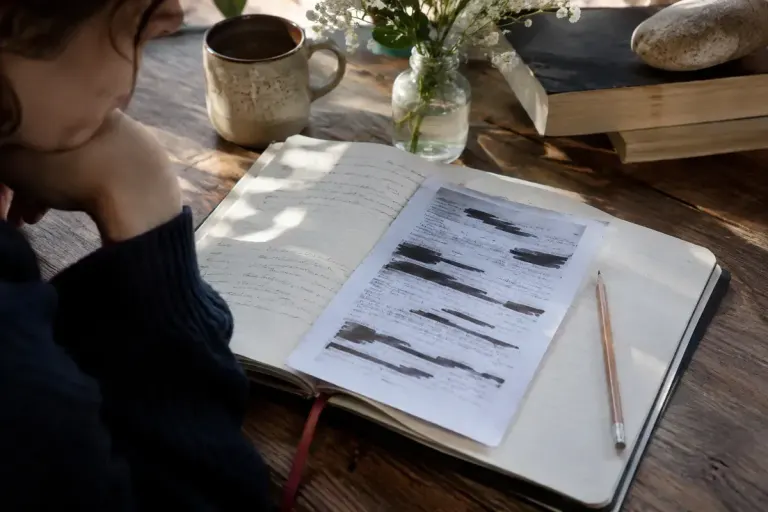
Erasure poetry makes a new work by removing words from an existing text. Read the surviving language, the spaces, and the relationship with the source.

A prose poem uses paragraph form without giving up poetic attention to sound and image. Read a short invented example and notice how its language works.

Anaphora repeats the beginning of successive phrases or lines. Try a short original example to hear how a stable opening makes later changes stand out.

A poem’s volta can shift its argument, mood or point of view. Find the turn by following the thought, then test what the earlier lines become afterwards.

Read enjambment through a short original example and see how a sentence continuing across a line break can delay, redirect or sharpen meaning.

An abecedarian poem follows alphabetical order. Try a short original exercise and see how a formal constraint can lead a poem somewhere unexpected.