
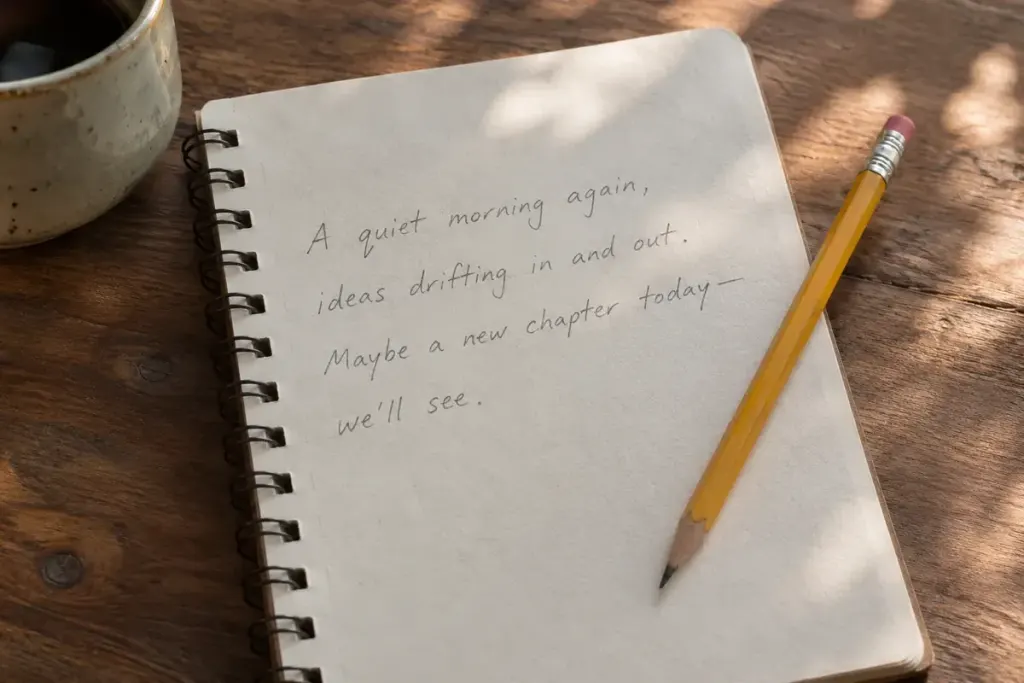
A clerihew does not need to march neatly like a formal verse exercise. Its pleasure often comes from a name, a pair of rhymes and a biographical observation that takes an unexpected turn.
The Academy of American Poets’ glossary describes the form as a comic four-line poem associated with Edmund Clerihew Bentley, using an AABB rhyme scheme and irregular line lengths. The looseness is part of the form’s character.
Begin with a person, then find the turn
A useful practice subject is a fictional person. That lets you experiment without turning an invented anecdote into a claim about someone real. Here is an original illustrative clerihew:
Professor May
Mislaid the day.
She searched her diary through the night
And found tomorrow, underlined twice in white.
The first two lines rhyme, as do the last two. The final line is deliberately much longer. It is a playful miniature rather than a factual biography or a model of regular metre.
Let the rhyme help without taking over
Write down several words that rhyme with the subject’s name or the first line’s ending. Then look for an amusing observation you can express with one of them. If the rhyme forces a confusing sentence, choose a different angle.
You do not have to tell the person’s entire life in four lines. A habit, an achievement viewed sideways or a harmless contradiction gives the poem a more focused target.
Read it aloud once for sense
Irregular rhythm does not excuse a sentence that nobody can follow. Read the draft aloud and check whether the joke is understandable before the reader has to work out the grammar.
When writing about a real person, distinguish a recognisable public fact from an allegation you have invented to reach a rhyme. Humour can be light without becoming careless.
Try three versions of the same subject: one with a short final line, one with a sprawling final line and one with a different pair of rhymes. Keep the version whose surprise feels earned, rather than the one that merely fits a syllable count the form never required.