
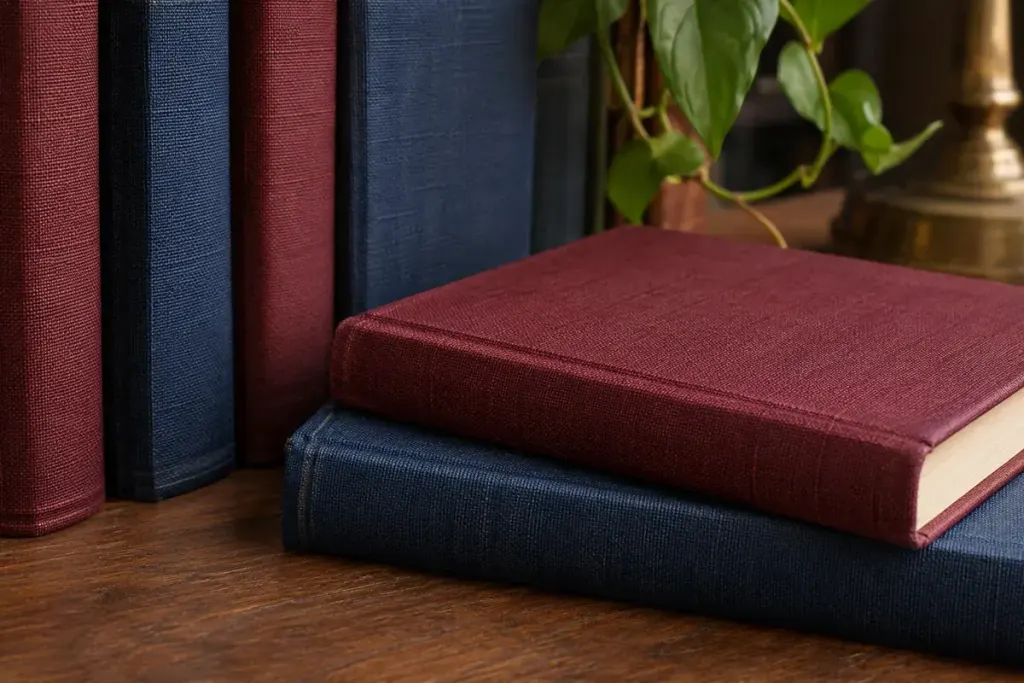
A library book’s cloth cover often feels quite different from an uncoated piece of fabric. Buckram is one material associated with that durable binding surface, but its name does not identify one universal coating or construction.
J Hewit & Sons describes its archival buckram as a coated cloth with a wipeable, abrasion-resistant surface. TALAS’s Buckram Fantasia is a cotton cloth with an acrylic coating and paper backing. The specific product matters when a binder chooses adhesives, decoration and handling methods.
Look at the binding without over-reading it
On a finished volume, examine the cloth texture, corners, joints and any lettering. A hard-wearing cover can coexist with fragile paper or a damaged text block. Conversely, a scuffed surface does not automatically mean the pages are loose.
A library rebind may also be later than the book’s printing. The cover material alone cannot establish an edition or publication date. Read the title and publication pages and, where relevant, the library’s binding or provenance records.
A useful shelf-care distinction
“Wipeable” is a product description, not permission to wet-clean every old cloth binding. Age, previous repairs, inks and an unidentified coating can change what is safe. For a valuable or damaged volume, seek a conservator’s advice before applying moisture or cleaners.
If you are making a new binding, keep a labelled offcut and test the intended adhesive and lettering method on it. The sample becomes a reference if you later need to match another volume in a set.
For readers, the reward is simpler: noticing that the cover is an engineered part of the object. Buckram can help a book withstand repeated handling, while the condition and history of the whole volume still deserve their own inspection.