
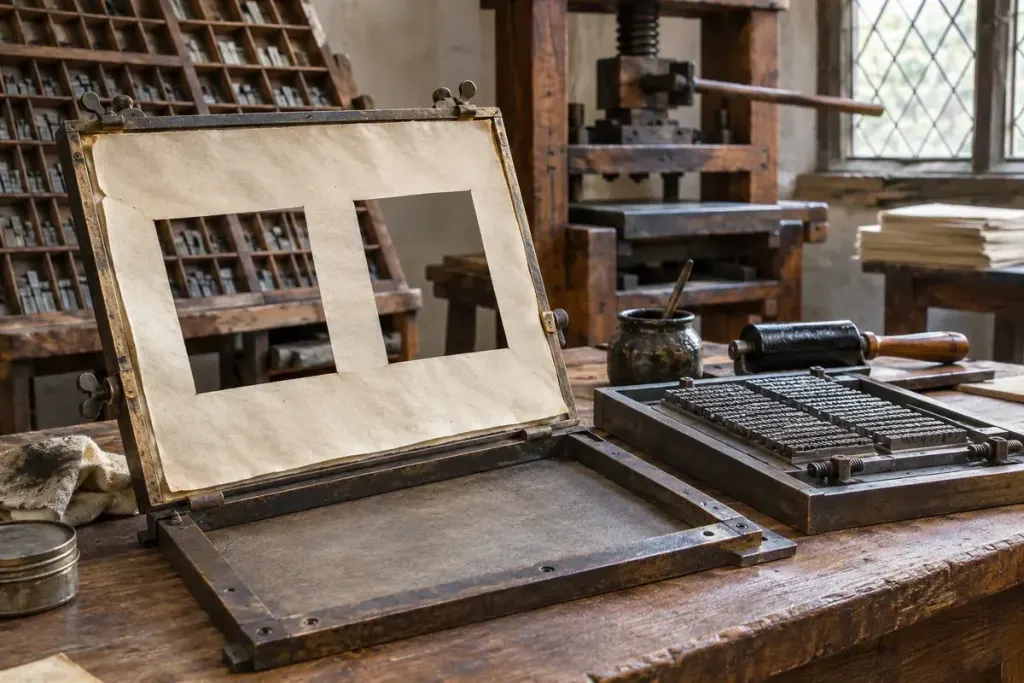
The blank margin of an old printed page can look like the part where nothing happened. At the press, keeping that area clean could require a deliberately prepared piece of equipment: the frisket.
The Getty Art & Architecture Thesaurus entry describes a printing-press component covered with paper and cut with openings corresponding to the intended printing areas. The mask allows the type to reach selected parts of the sheet while shielding others.
Separate the mask from the printing surface
The type or other printing element carries the image. The frisket controls which parts of the paper remain exposed. It is therefore different from the page layout itself, even though its openings must correspond to that layout.
The National Gallery of Australia’s printmaking glossary gives a broader description of frisket material used to keep areas free of ink. The term also appears in other art processes, so a reference to a frisket should be read in its particular workshop context.
For a simple paper demonstration, draw two blocks representing pages on a sheet. Lay another sheet over it with two matching windows cut out. Move the upper sheet slightly and notice how an edge of the intended image becomes covered. No ink or working press is needed to see why correspondence between mask and layout matters.
Look for evidence without inventing a production story
When viewing an early book, record an unusual unprinted patch or an ink mark as an observation first. A photograph alone may not identify its cause. Paper damage, inking, impression and later handling can create different effects, and a specialist may need to examine the object.
A museum demonstration is a useful place to ask how the frisket, tympan and sheet are brought together on that particular press. Watch from the permitted position and let the demonstrator operate the equipment.
Understanding this small component changes how you see a page. Printed letters and clean surrounding space were both outcomes of the work, and the machinery that protected the white areas belongs in the book’s production history too.