
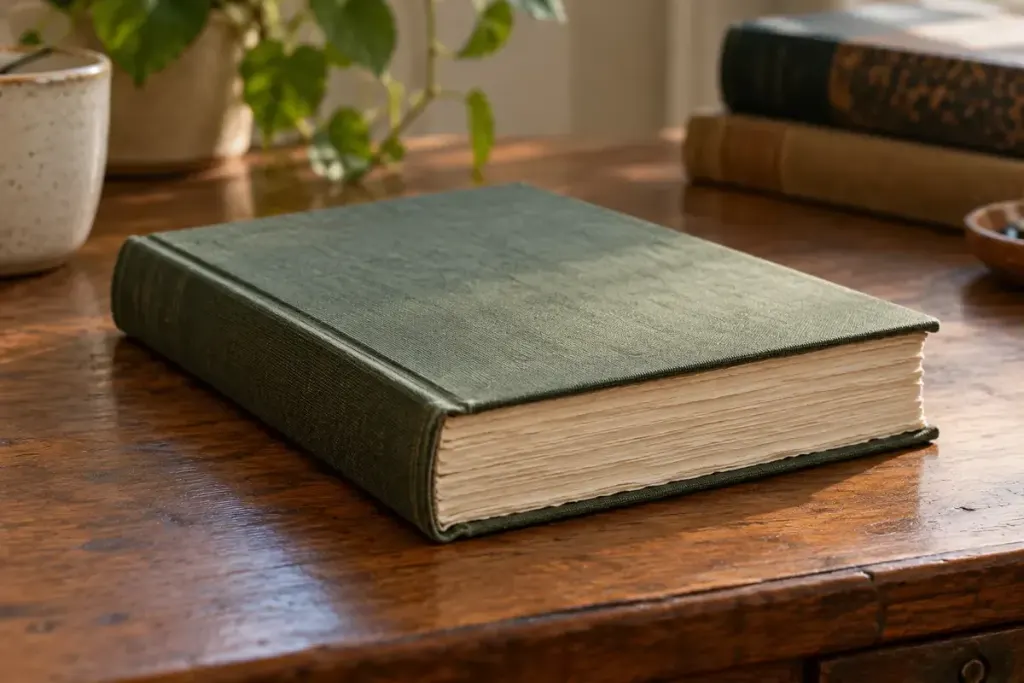
A new book arrives with pages that do not form a smooth block. Some leaves project a little farther than others, and the outer edge feels irregular. Before deciding the copy is faulty, check whether the edition was designed that way.
Publishers sometimes specify deckle-edged paper as a feature. For example, Penguin Random House describes a deluxe edition of Gravity’s Rainbow as having deckle-edged paper. That description concerns a particular edition, not every printing of the novel.
Match the description to the copy
Use the ISBN and publisher details inside your book when checking a listing. A photograph of a different edition may show smooth edges even when your copy is intentionally rough. Look for an explicit statement about the paper rather than relying on a seller’s generic image.
Then inspect the individual leaves. An intentionally irregular edge and a torn page are not the same thing. Missing printed text, a tear extending into the page, or a leaf detached from the binding deserve separate attention. If you are unsure, send the seller clear photographs before attempting a repair.
Do not improve the edge with scissors
Trimming can remove part of the intended design and permanently alter the copy. It may also leave a more uneven result than the original. For an older or valuable book, ask a qualified book conservator about damaged or unopened leaves rather than cutting them yourself.
Reading comfort is still a legitimate preference. If rough edges make turning pages difficult, look for another edition with a different finish. Ask the seller about that exact ISBN. Understanding the construction lets you distinguish a feature you dislike from a defect, which makes both buying and discussing books considerably easier.