
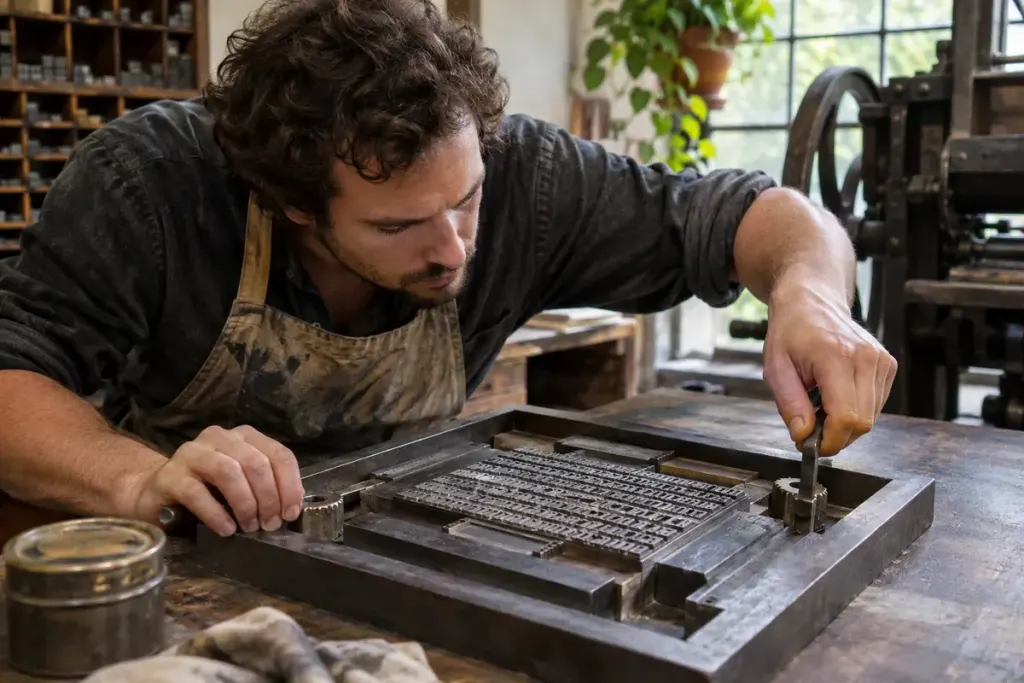
A page of metal type begins as a collection of separate pieces. Before it can print reliably, those pieces must stay together. The printer’s quoin is part of the answer: a locking device that applies pressure within the frame holding the type.
Read the frame from the outside in
The frame is called a chase. Inside it, the type and other printing elements are arranged with spacing material. Larger non-printing blocks, often called furniture, occupy the surrounding space. Quoins take up the remaining clearance and secure the arrangement, or forme.
The Melbourne Museum of Printing’s illustrated type-setting material is useful because it shows these parts together. A quoin makes more sense beside the furniture and chase than as an isolated object in a cabinet.
Pressure holds; height prints
The locking furniture and quoins are not intended to appear as marks on the finished sheet. Their job is mechanical. The printing surfaces stand at the required height, while surrounding material supports the arrangement below that surface.
This distinction explains a common museum puzzle: why does so much of the assembled object look blank or unlike letters? A finished page records only selected surfaces. The rest of the apparatus helps those surfaces remain in the right places through the printing process.
What to notice at a demonstration
Ask the demonstrator to point out the chase, one piece of furniture and a quoin before the forme goes into the press. Look for how pressure is applied across the assembly. Different periods and workshops used different locking designs, so do not assume every quoin operates in exactly the same way.
A loose piece of type can be small enough to disappear between your fingers, yet a composed page may be heavy and vulnerable to damage if mishandled. Leave lifting and adjustment to the demonstrator rather than testing whether it is secure yourself.
On the next printed page you examine, think of the quoin as an invisible contributor. It does not supply the words or illustrations. It helps a temporary arrangement of many separate objects behave as one stable printing surface.