
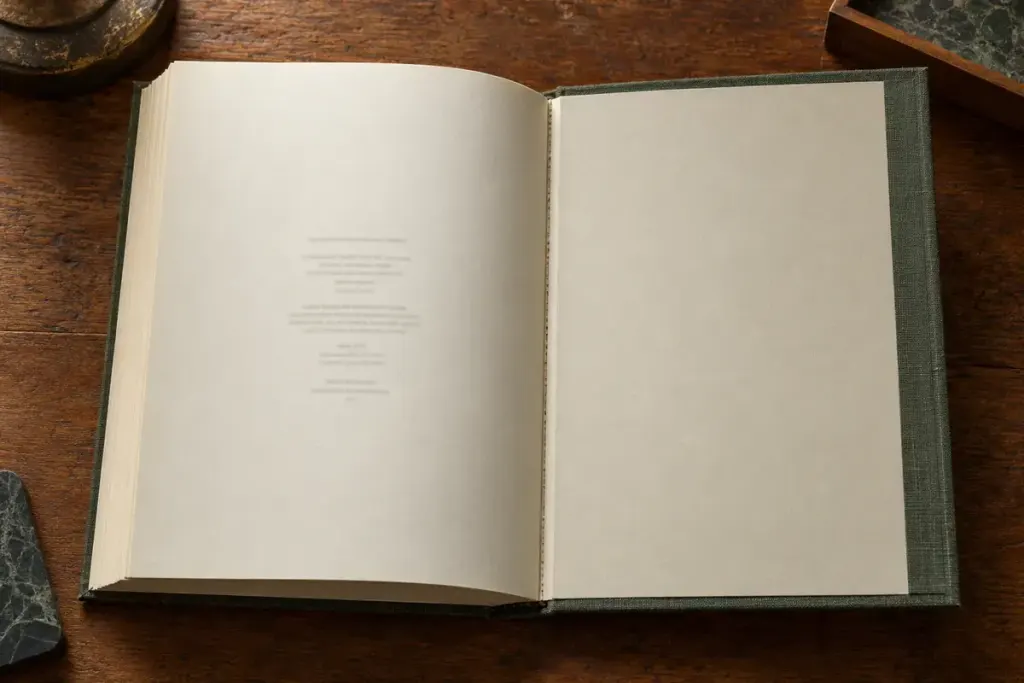
After the final chapter, a small paragraph may name a typeface, paper stock, printer or binding method. This production note can be a colophon: a place where the physical book tells you something about how it was made.
Read the production note as its own kind of evidence
A colophon varies by period and publisher. It may be elaborate, brief or absent. Do not expect every edition to contain the same fields, or assume that a printer’s name is the author’s publisher. The copyright page, title page and colophon can describe different responsibilities.
For context on those physical processes, the V&A’s printing and binding demonstration shows work involved in producing a book. It helps turn names such as printer and binder into distinct jobs rather than decorative credits.
Try a small comparison between two books you already own. Note where the production information appears, what it names and what remains unstated. Look at the page while reading the typeface credit, or examine the binding gently after reading the construction note. Do not force a book open to confirm a detail.
A limitation statement needs careful reading
If a colophon describes a numbered edition, record the wording and the number in your copy separately. A statement about a printing does not establish market value, authenticity or the total number of every edition of that work. Those questions require additional evidence.
Similarly, a modern facsimile may reproduce an older colophon while also carrying new publication details. Keep the date of the reproduced original apart from the date of the object in your hands.
A useful reading note might say “this edition credits its printer but does not identify the paper.” That is more accurate than filling the gap from a similar-looking book. The colophon adds another way to read: attention to the people and materials that made the text available.