
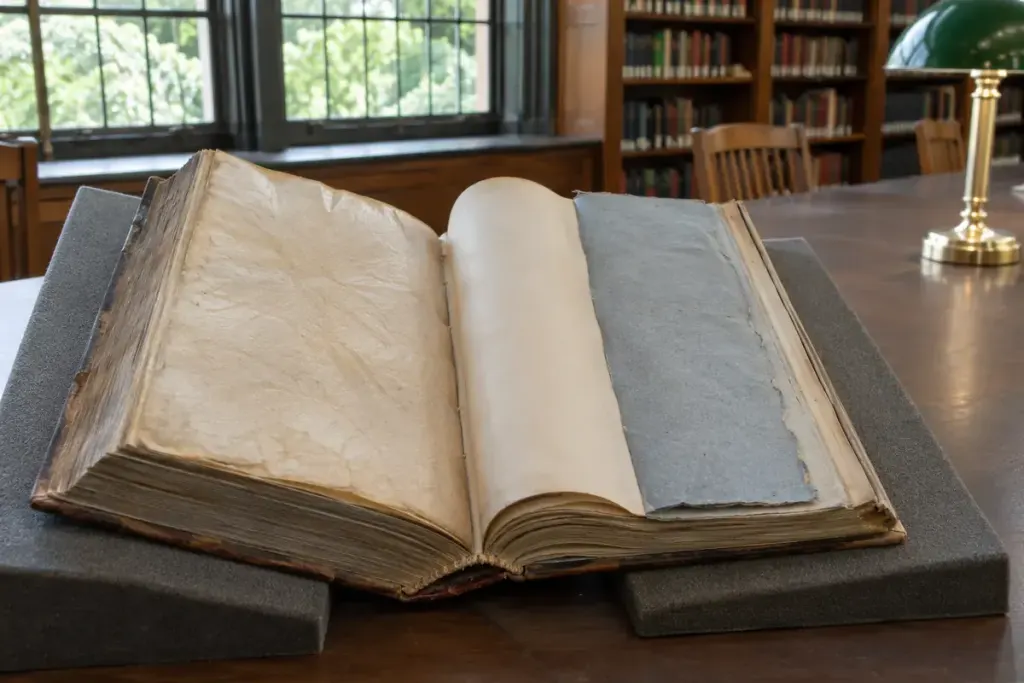
One spine does not always mean one published work. Open a sammelband and you may find several separately printed items gathered into a single binding. Their shared cover can reveal a collecting decision that is different from the publication history of any one title inside.
The Folger’s cataloguing explanation discusses the term and distinguishes these volumes from collections reissued by a bookseller or publisher from stock. Yale’s bound-with guidance shows how libraries record multiple titles connected by one physical volume.
Read the volume and its contents separately
Begin with the binding, any spine title and ownership marks. Then identify the title pages, imprints and pagination of the individual works. A new title page may signal a separately issued item, but do not make the decision from one feature alone. Compare the catalogue description and ask a librarian when the structure is unclear.
For an illustrative note, make one heading for the physical volume and a numbered list for the items in their bound order. Keep the wording “item 3 in this volume” separate from a publisher’s original part or volume number.
Do not assume the reason for the gathering
Works might share a subject, author, owner or convenient size. The arrangement can suggest a reading interest without proving exactly who assembled it or why. A later binder may have brought together material that was previously separate.
Record evidence such as inscriptions or an old contents list before offering an interpretation. “Three pamphlets concern the same dispute” is an observation. “The first owner bought all three together” requires additional support.
The order matters. Removing one work from its companions can lose evidence about how the collection was used. For a fragile or valuable volume, consult a conservator before considering any rebinding or separation.
When requesting a scan or citation, provide the individual title and the library’s identifier for the containing volume. That gives another reader a route to both the text and the physical context.
A sammelband invites two kinds of reading at once: what each work says and what their gathering may reveal. Keeping those levels distinct makes the object more interesting, not less coherent.