
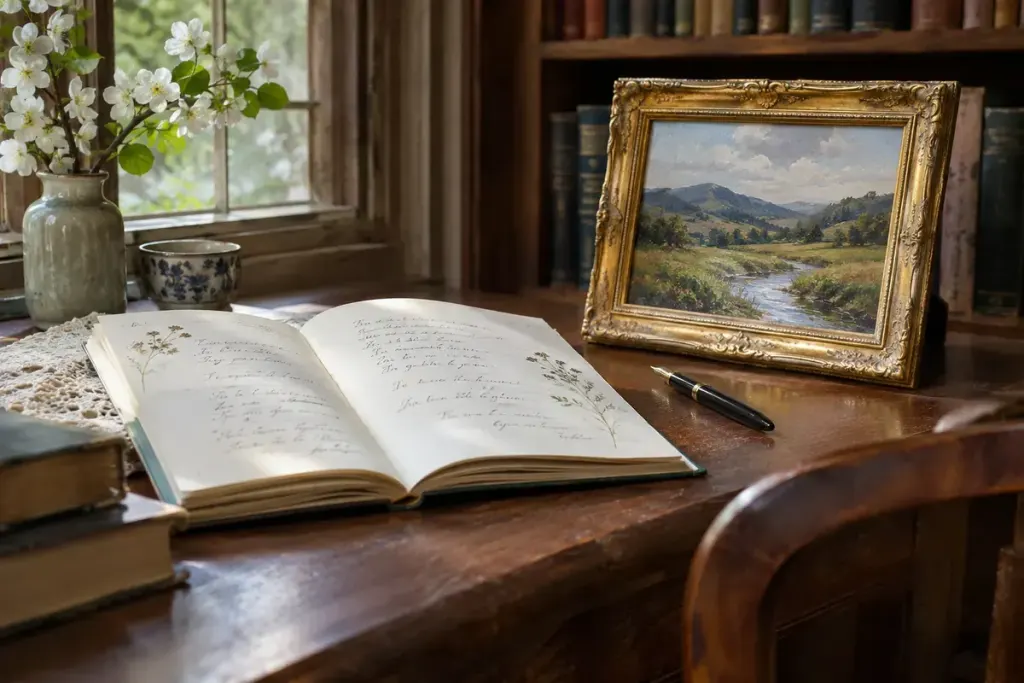
A painting contains a closed window, an empty chair and a bowl of fruit. A poem about it might describe those objects, speak in the voice of the absent sitter, or imagine the room five minutes after the scene. These are different ways of responding to the same artwork.
The Academy of American Poets’ explanation of ekphrasis describes poetry that engages with visual art. The artwork is a point of encounter, not a checklist that the poet must reproduce item by item.
Read the poem once before hunting for matches
Notice the voice, movement and mood of the writing. Who seems to be speaking? Does the poem remain with a visible moment, move into memory, or invent what cannot be seen? Mark those shifts before opening a reproduction of the artwork.
Then compare. Which details receive attention, and which prominent objects disappear from the poem? An omission can be as interesting as an accurate description. It may reveal what the speaker wants from the image rather than what the image objectively contains.
A small experiment with an invented picture
Use the imaginary room above. Write three short prose notes: one describing only what is visible, one spoken by the empty chair, and one beginning after someone opens the window. Do not try to make them polished poems yet.
The first version constrains you to observation. The second changes the speaker. The third adds time beyond the frame. Comparing them makes it easier to recognise those choices in an actual poem without reducing the poem to a summary of the painting.
When discussing a published work, distinguish the poet’s invention from the artist’s documented biography. A moving imagined voice is not automatically evidence about the person depicted. Check the artwork’s title, artist and date through the collection that holds it if those facts matter to your interpretation.
Ekphrastic reading becomes richer when both works retain their independence. The poem can argue with, inhabit or transform the image. You do not have to decide that one is merely an explanation of the other.